A transitory, speculative fiction research laboratory facilitated by Martina Raponi, Brandon Gibson-DeGroote, and [M] Dudeck, the Ansible Institute constructs environments that activate the imaginative possibilities of worldmaking across media.
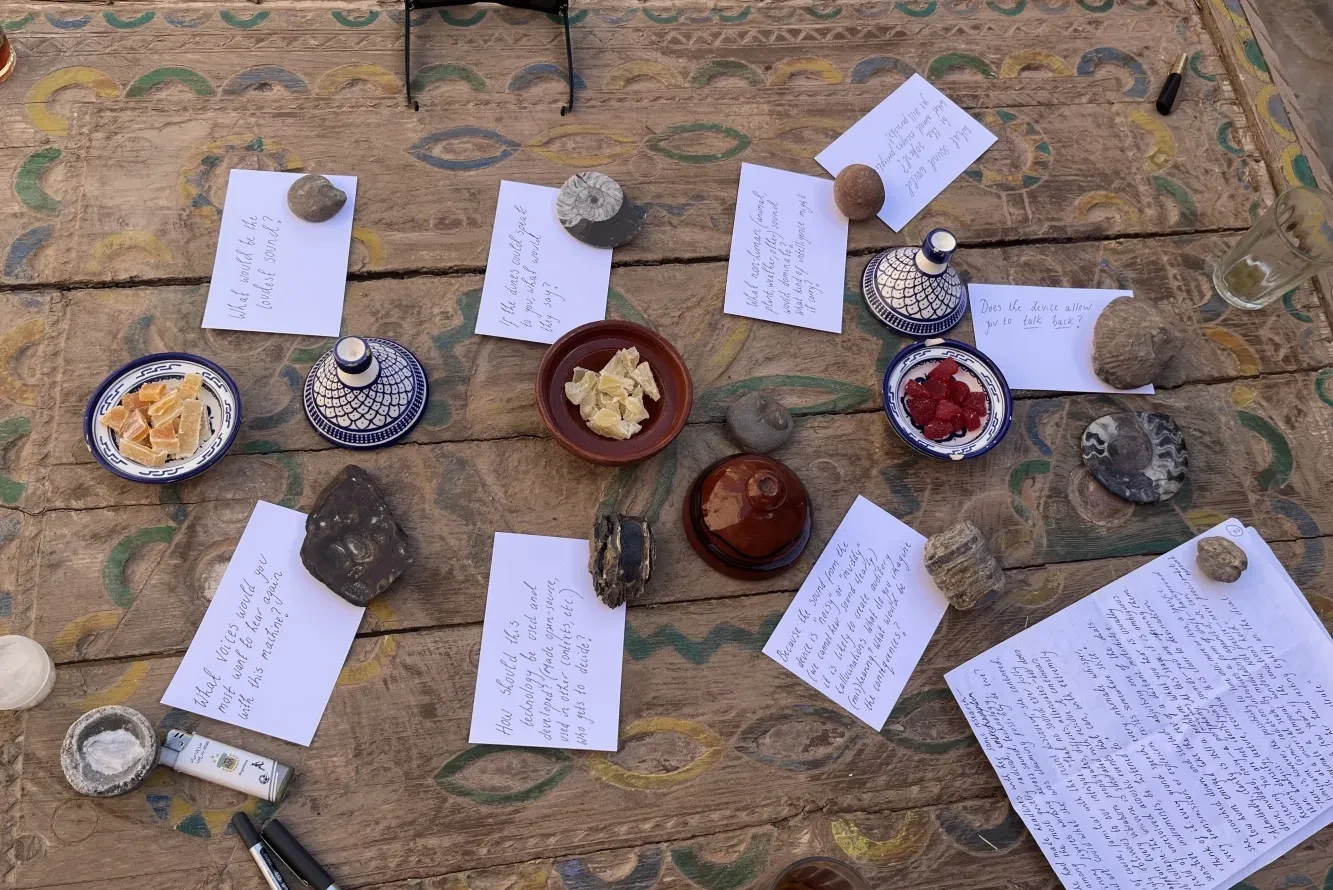
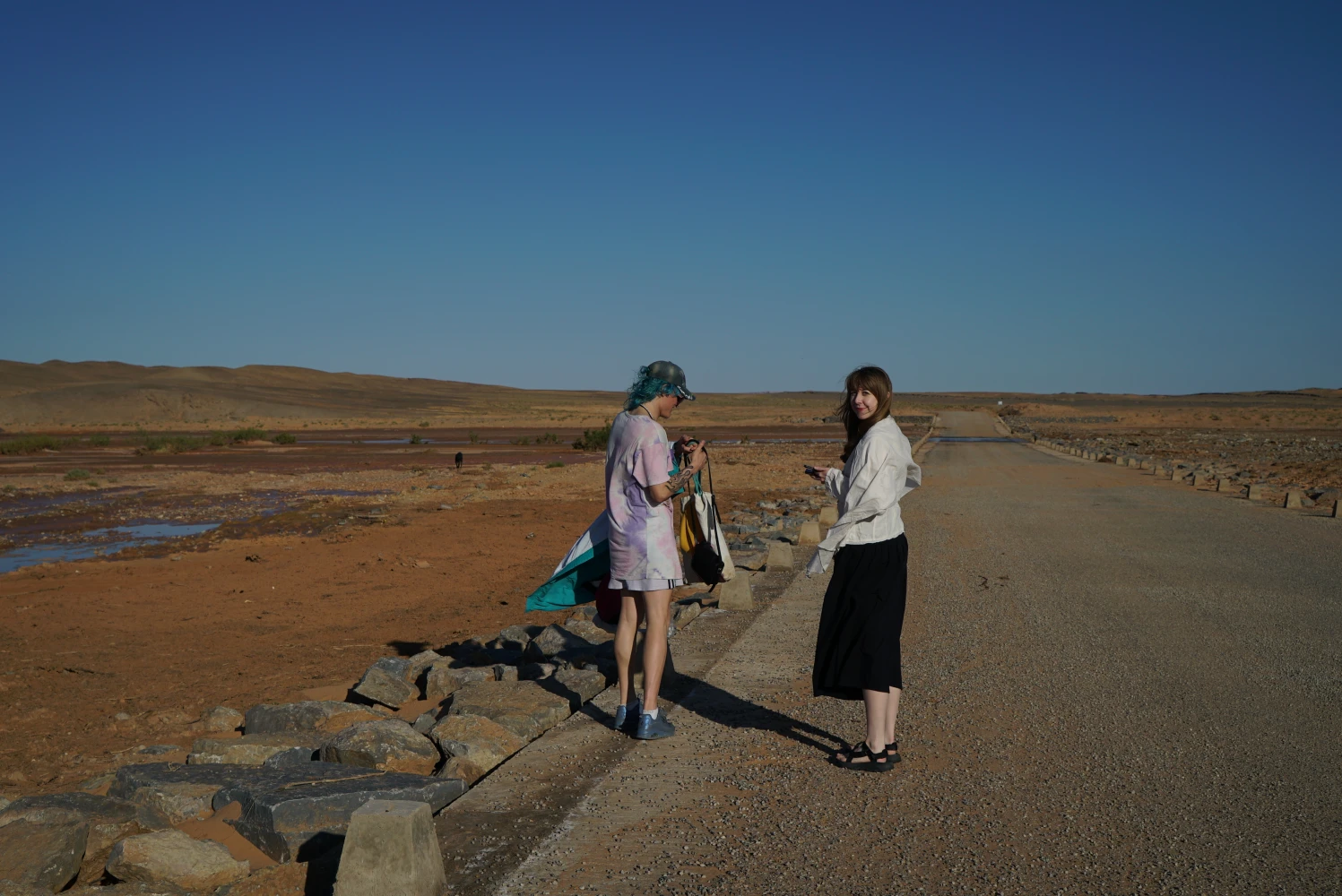
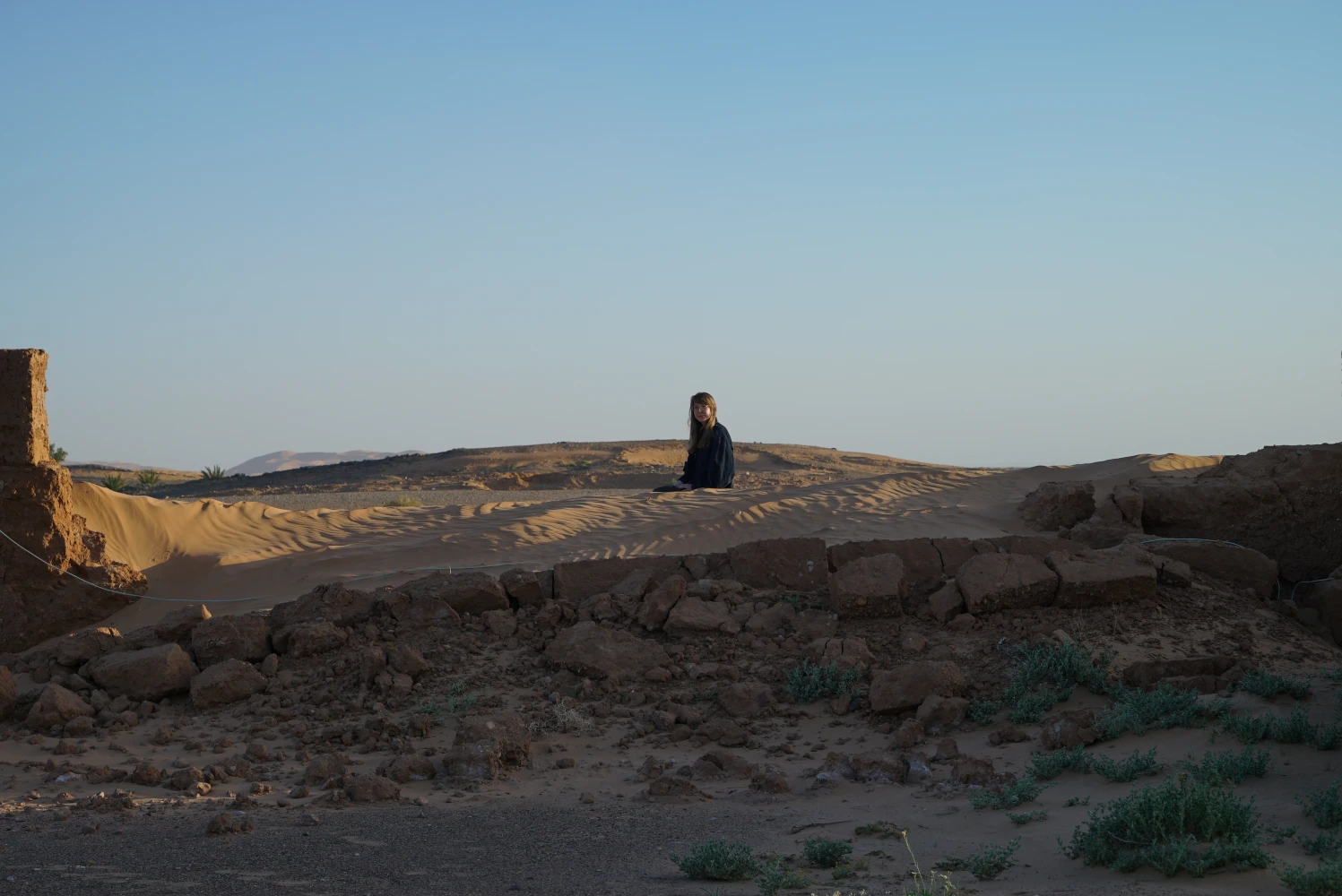
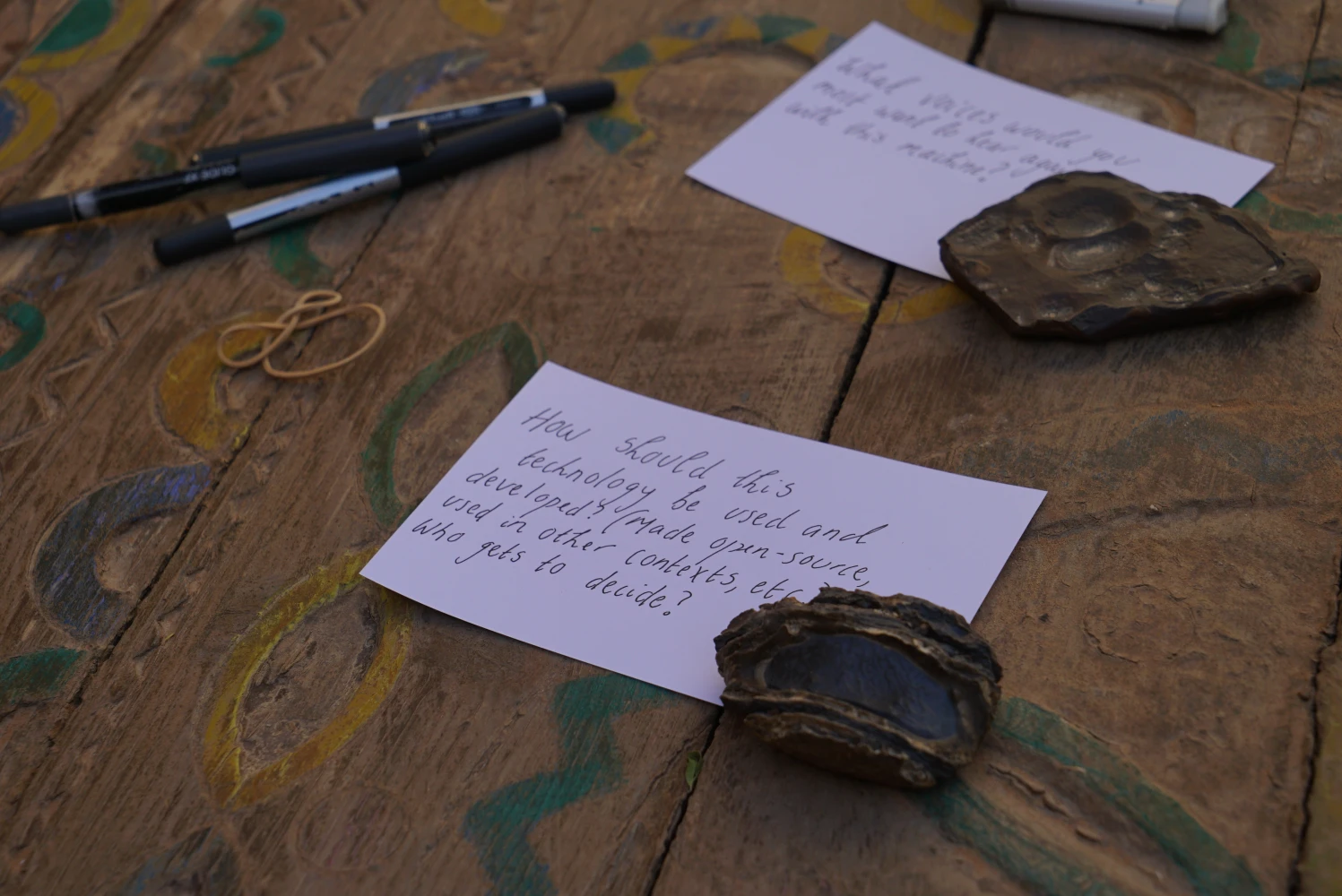
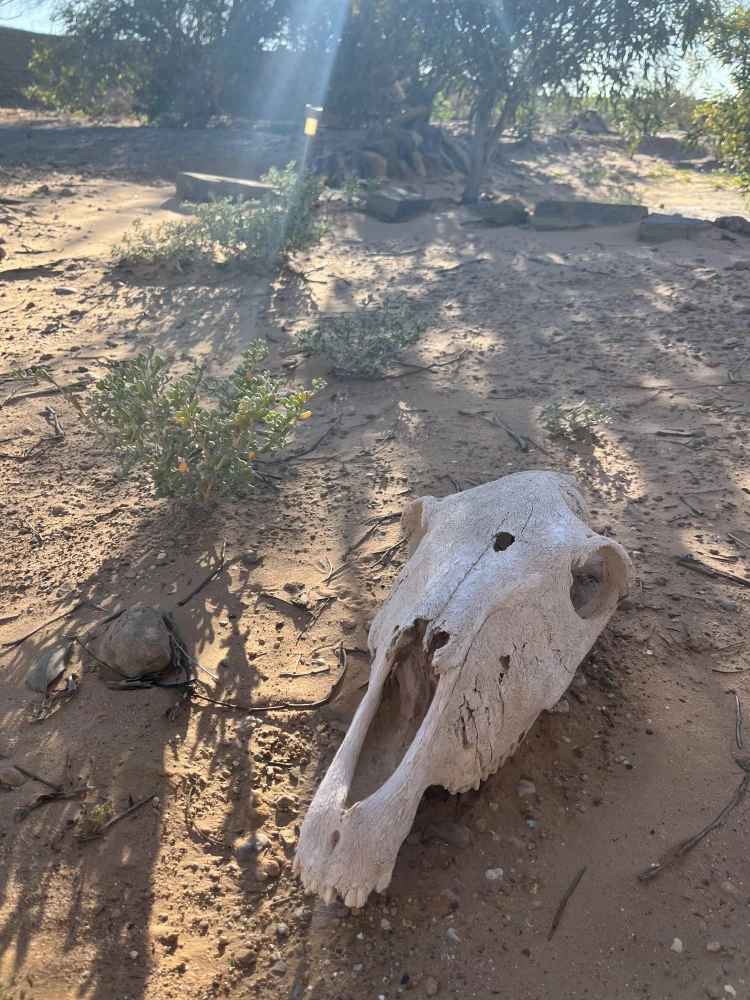
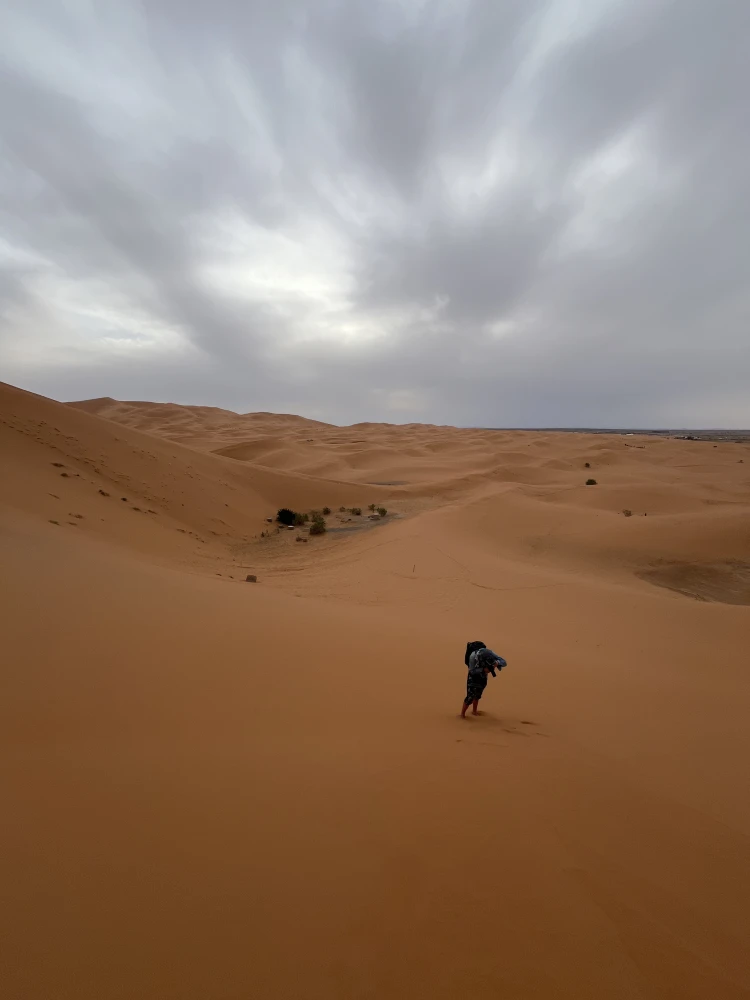
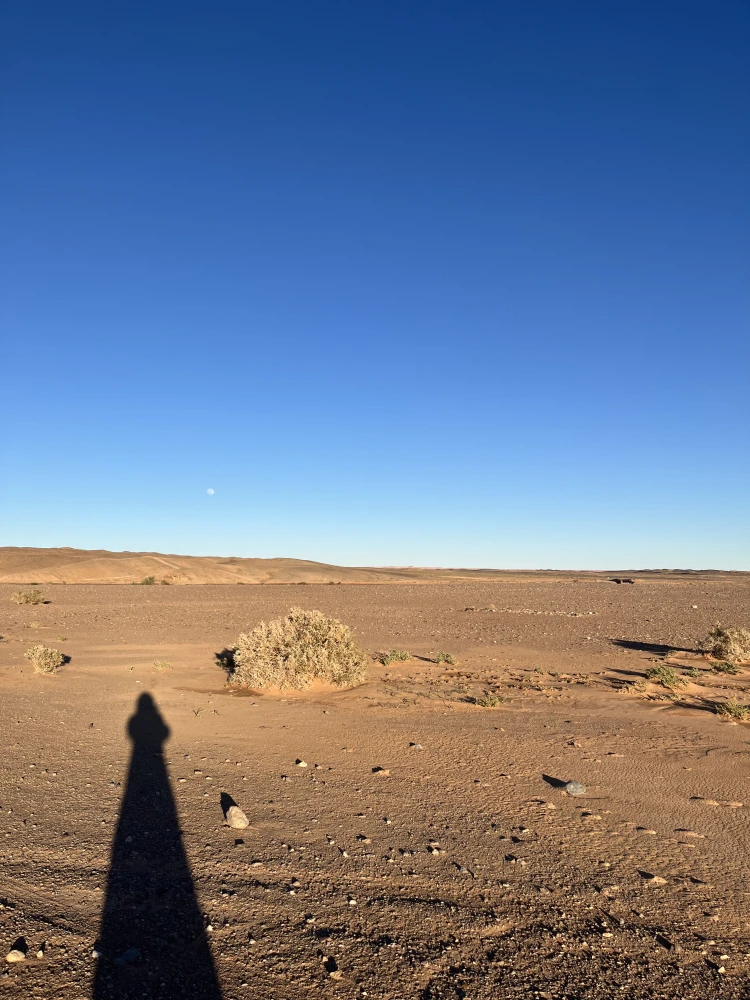
During the two-week residency held at Cafe Tissardmine, I hosted a writing workshop and began drafting a sci-fi novel exploring questions of temporality, environmental collapse, sound, and material agency in the Sahara Desert. Within the colonial imaginary, the Sahara appears as a blank, eternal void, its human inhabitants understood as existing “outside time". This project resists that framing, instead attending to the desert’s temporal complexity – its circadian rhythms and deeper geological time. Beneath the dunes lies the residue of a vanished ocean: the Tethys Sea, which covered the region over 100 million years ago. Fossilised ammonites, plesiosaurs, and other marine life frequently surface, forming a material archive embedded in the sand. The Sahara is also profoundly mobile; its winds carry particulate matter across continents, dispersing minerals and microbial traces into distant ecosystems, contributing, for instance, to the presence of microscopic organisms in extreme environments such as atop Mount Everest. Rather than remaining fixed, the desert operates as a planetary agent, circulating particles, memory, and lifeforms across space and time. In this sense, it prefigures possible futures. As climate change intensifies, shifting atmospheric systems and diminishing rainfall will expand desert conditions across equatorial regions, rendering the Sahara a model for what is to come.
Photography: Hannah Pezzack & Yeon Sung / archiveofmatters.com